The Complete Guide to Best Dance Classes for Kids in Sydney
Our kids have done ballet, hip-hop, and jazz across three different studios, and the one thing we wish someone had told us earlier: the studio culture matters more than the dance style. A warm, encouraging studio where your child feels safe to make mistakes will keep them dancing for years. A competitive, exam-obsessed environment can kill the joy in a single term.
Sydney has an extraordinary range of dance studios — from boutique suburban schools with 30 students to major institutions like Brent Street and Sydney Dance Company. For most kids, a local suburban studio is the perfect starting point. They're more affordable, classes are smaller, and the teachers often know every child by name. If your child falls in love with dance and wants to pursue it more seriously, the bigger institutions are always there later.
Pricing varies significantly: expect $13-$26 per class depending on duration and style, or $110-$350 per 10-week term. Here's a tip that saves real money — dance is eligible for BOTH the NSW Active Kids voucher ($100) AND the Creative Kids voucher ($100), meaning eligible families can claim up to $200 per year per child. No other activity type qualifies for both vouchers (Service NSW, NSW Government). Apply through Service NSW.
The best age to start depends on the style. Creative movement and pre-ballet classes are available from age 2-3 at many studios. Structured ballet and jazz classes typically begin at age 4-5. Hip-hop tends to start from age 5-7 depending on the studio. Contemporary dance usually starts at 8-10, once children have some physical awareness. Our advice: start with one class per week and add a second style only if your child is genuinely keen — over-scheduling kills enthusiasm faster than anything.
Most studios offer a free trial class or a discounted first term — always take advantage of this. Watch how the teacher manages the class, check that the space is clean and safe with appropriate flooring (sprung floors are ideal), and see whether your child lights up or shuts down during the session. That reaction tells you everything.
1. Dance Studios by Sydney Region
Sydney's dance studios range from major institutions to beloved suburban schools. Here's where to look in your area.
The CBD and Inner West have Sydney's highest concentration of quality studios. Brent Street in Ultimo is arguably Sydney's most prestigious dance school — training ground for professional dancers, with programs from age 3 through to full-time pre-professional. Sydney Dance Company in Ultimo runs Youth Programs for ages 5-17 across ballet, contemporary, jazz, and hip-hop. Ev & Bow in Surry Hills is a boutique studio with a creative, contemporary focus that appeals to kids who want something different from traditional ballet school. In the Inner West, Gymkidz Newtown and several independent studios in Marrickville and Leichhardt offer affordable classes.
North Shore families have National Theatre Ballet School in St Leonards (excellent for serious ballet students), Cox Irish Dance Academy (North Sydney — for something completely different), and Neutral Bay School of Dance ($20-$23 per class). Gladesville's Jazz Factory is a standout for jazz, contemporary, and musical theatre.
Western Sydney has great value options: Dance Magic Academy runs classes at multiple locations from just $13 per 45-minute class, Creative Dance Academy in Penrith and Blacktown offers ballet, jazz, and modern, and ProgressDNA in Rydalmere charges from $14 per class across all styles.
The Sutherland Shire and South Sydney have Terpsichore School of Dance (Cronulla, Gymea Bay, Engadine — from $13.20 per class) and North Sydney Physie runs across various locations. For the Northern Beaches, The Dance Studio Pittwater and Freshwater Dance are the local favourites.
2. Dance Styles Explained for Parents
If you didn't grow up doing dance, the variety of styles can be overwhelming. Here's a plain-English breakdown of what each style involves.
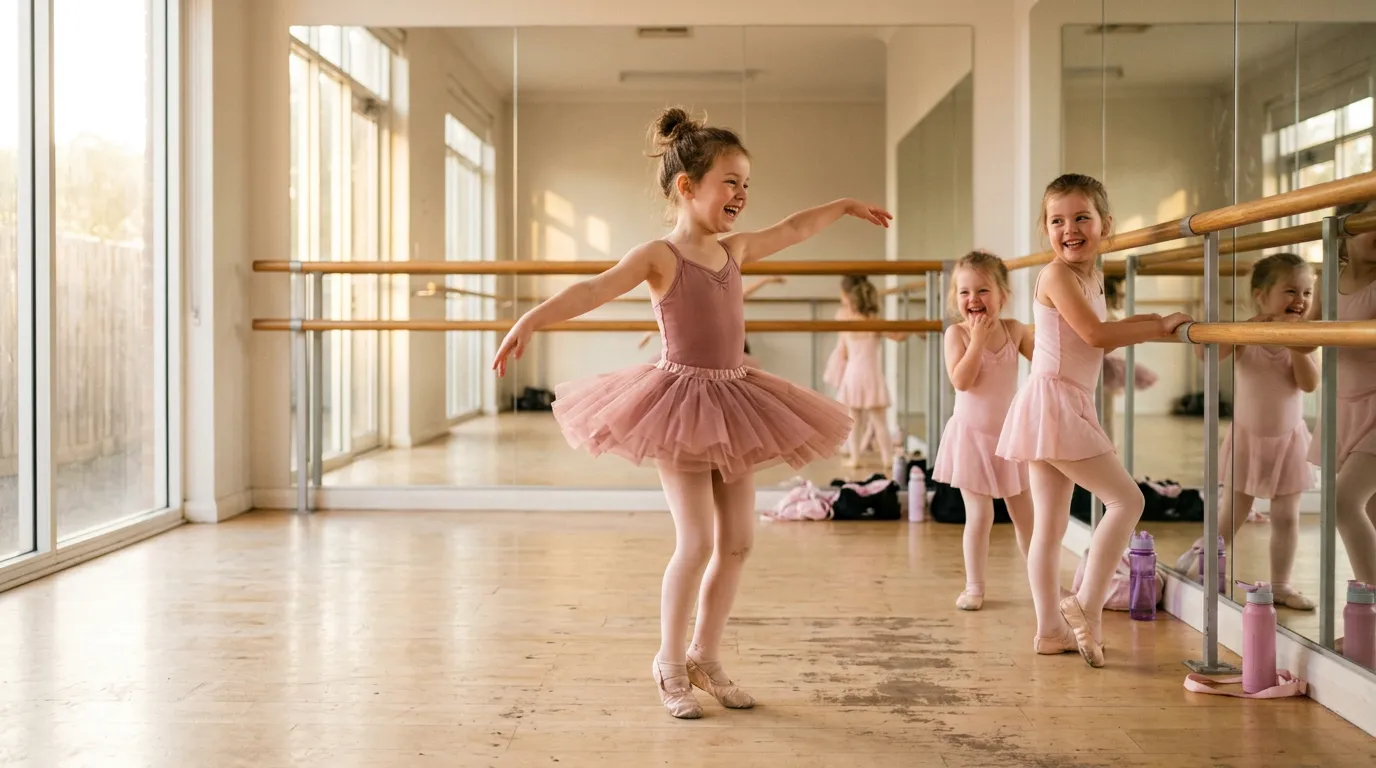
Ballet is the foundation of all dance. Classes focus on posture, turnout (rotating legs outward from the hips), precise footwork, and graceful arm movements. It's structured and disciplined — children learn positions (first through fifth), barre exercises, and eventually pointe work (from approximately age 11-12 with teacher approval). Ballet builds exceptional posture, strength, and musicality. It can feel rigid for some kids, which is fine — not every child loves it.
Jazz is energetic and fun — think Broadway musicals. Classes involve warm-ups, across-the-floor exercises (leaps, turns, kicks), and choreographed routines set to popular music. Jazz builds strength, flexibility, and performance quality. Most kids who enjoy performing gravitate to jazz.
Hip-hop is the style most kids ask for by name. Classes teach street dance styles (popping, locking, breaking, choreography) set to current music. It's high-energy, builds fitness and rhythm, and feels cool — important for keeping older kids and teenagers engaged. Less technique-focused than ballet but demands excellent musicality.
Contemporary blends ballet and jazz with modern dance techniques. It emphasises expression, creativity, and emotional storytelling through movement. Floor work, improvisation, and partnering are common elements. Suits creative, expressive children — typically introduced from age 8-10.
Tap involves creating rhythmic patterns with metal-tipped shoes on a hard floor. It builds exceptional rhythm, musicality, and coordination. Less popular than it once was but experiencing a revival — and it's genuinely satisfying to learn.
Acrobatic dance (acro) combines dance with gymnastics-style tricks — handstands, cartwheels, backbends, aerials. Very popular with energetic kids who love physical challenge.
3. How to Choose the Right Dance Studio
Finding the right studio is more important than choosing the right style. Here's our checklist after trying three different studios.
Visit and observe a class before enrolling. Watch how the teacher manages the group — are they encouraging and patient, or harsh and critical? Both exist in Sydney. For young children, warmth and encouragement are non-negotiable. Check the studio's flooring — proper sprung floors (not concrete with vinyl on top) matter for joint health, especially in ballet and jazz. Good studios invest in proper dance flooring.
Ask about class sizes. Under 12 students per teacher is ideal for children under 8. Larger classes mean less individual attention and more time waiting for turns. Some popular studios have classes of 20+ students — fine for older kids but overwhelming for beginners.
Check the studio's philosophy. Some studios are competition and exam-focused — students enter eisteddfods (dance competitions) monthly and do annual exams. Others are recreational-focused with a single end-of-year concert. Neither is wrong, but they attract different families. Be honest about what suits your child and your schedule.
Location and parking matter more than you'd think. You'll be making this trip weekly for years, often in after-school traffic. A studio 10 minutes from home beats a 'better' studio 30 minutes away. Check parking availability — some Inner City studios have zero parking and require public transport.
Finally, ask about total annual costs upfront: term fees, costume fees, exam fees, concert levies, and uniform requirements. A $15/class studio can cost $1,500 per year once extras are added. Budget transparency from day one saves surprises later.
“Dance is the only kids activity eligible for both the Active Kids AND Creative Kids voucher — that's $200 per child per year. No other activity type qualifies for both.”
Compare dance Near You
Tell us where you are and we'll match you with the best options.
Listings coming soon — we're adding providers across Sydney. Subscribe for updates when they're live.
Get the latest dance deals and openings
New venues, seasonal offers, and activity ideas — delivered to your inbox.
About Tamara
Sydney mum of two and founder of KidsPlaySpace. Tamara has visited hundreds of play centres, playgrounds, and kids venues across Sydney to bring families honest reviews and real recommendations.